The Suzuki Method, created by Japanese violinist and educator Dr. Shinichi Suzuki, is one of the most influential approaches to music education in the world. Rooted in the belief that “Every Child Can”, it treats music learning as a natural process, much like learning a mother tongue, and emphasizes listening, repetition, and a supportive environment involving both teacher and parent.
In Egypt, the Suzuki Method has been transforming the lives of young musicians for more than three decades. Its history is shaped by the pioneering efforts of Dr. Osman El Mahdy, who introduced the first Suzuki violin class at the Cairo Opera House in 1993, and Dr. Mona Fekry, who founded the first Suzuki piano class in 1997. Their commitment to the Suzuki philosophy extended beyond teaching: in 2001, Dr. Mona Fekry’s husband, Dr. Mohsen Edward, translated Dr. Shinichi Suzuki’s seminal book Nurtured by Love into Arabic, making the Method’s core principles accessible to a wider Arabic-speaking audience. By 2007, a new chapter began when Georges and Samuel Mohsen, among the first Egyptian students trained through the Suzuki Method, established the first Suzuki violin class outside the Cairo Opera House. This pivotal step brought Suzuki education into the wider community, expanding access beyond institutional boundaries and reinforcing a growing network of teachers, students, and families inspired by a philosophy that nurtures both musical excellence and character.
1993 – First Suzuki Violin Class in Egypt – Dr Osman El Mahdy
The story began in November 1993 at the Cairo Opera House, where the first Egyptian class to learn the Suzuki Method was launched under the name Min-On Class Kobayashi/Suzuki Method. This initiative was made possible through a collaboration between the Cairo Opera House and the Min-On Concert Association in Japan.
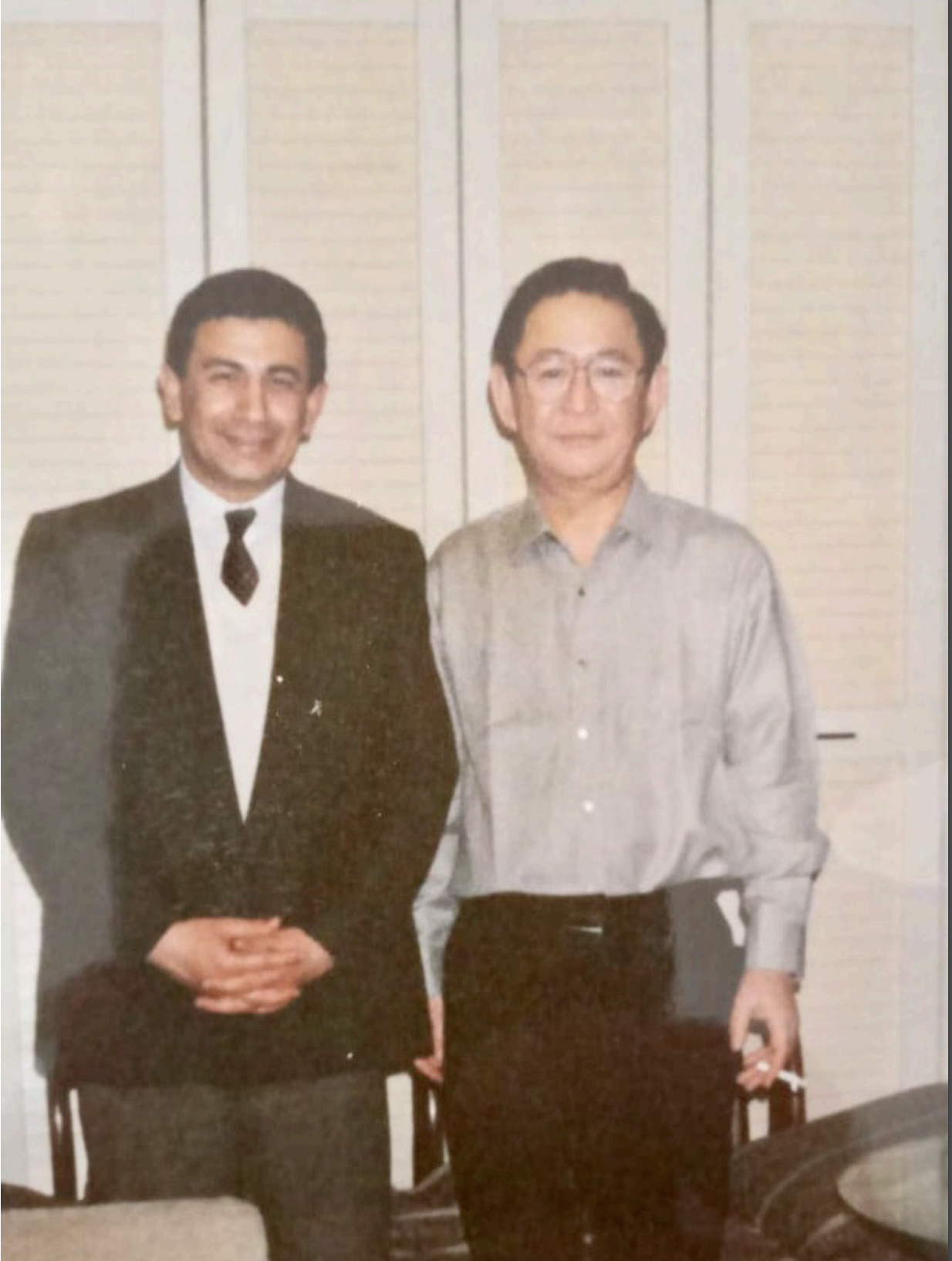
Japanese violinist and teacher Takeshi Kobayashi, a distinguished Suzuki educator, traveled to Cairo to introduce the method and train Egyptian violinist Dr. Osman El Mahdy. Together, they taught Egypt’s first Suzuki violin students, applying the core principles of listening, imitation, and gradual skill-building.
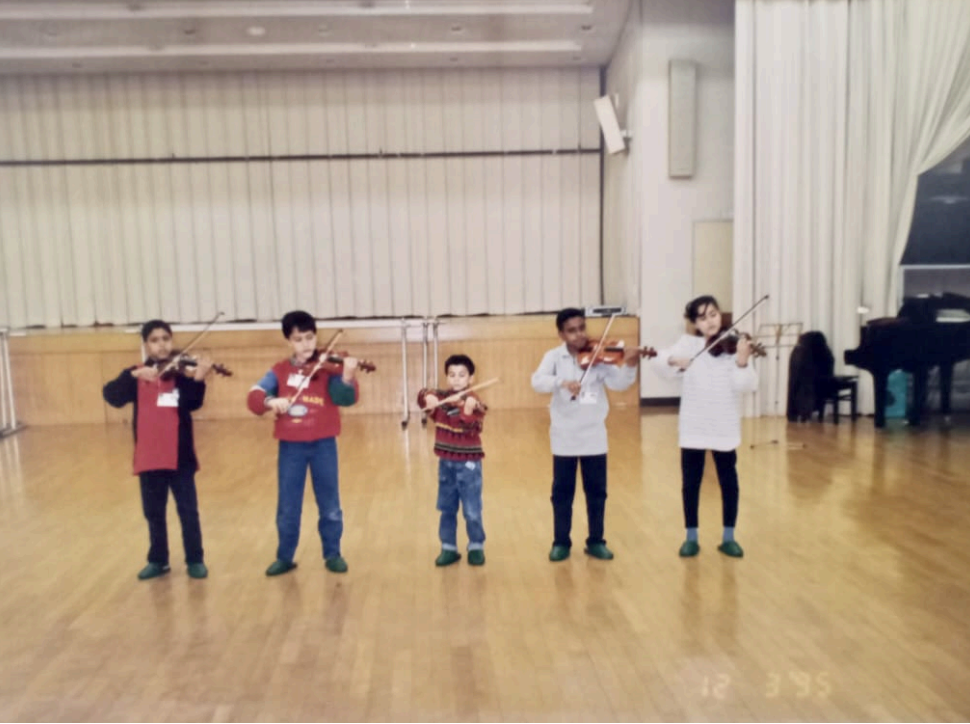
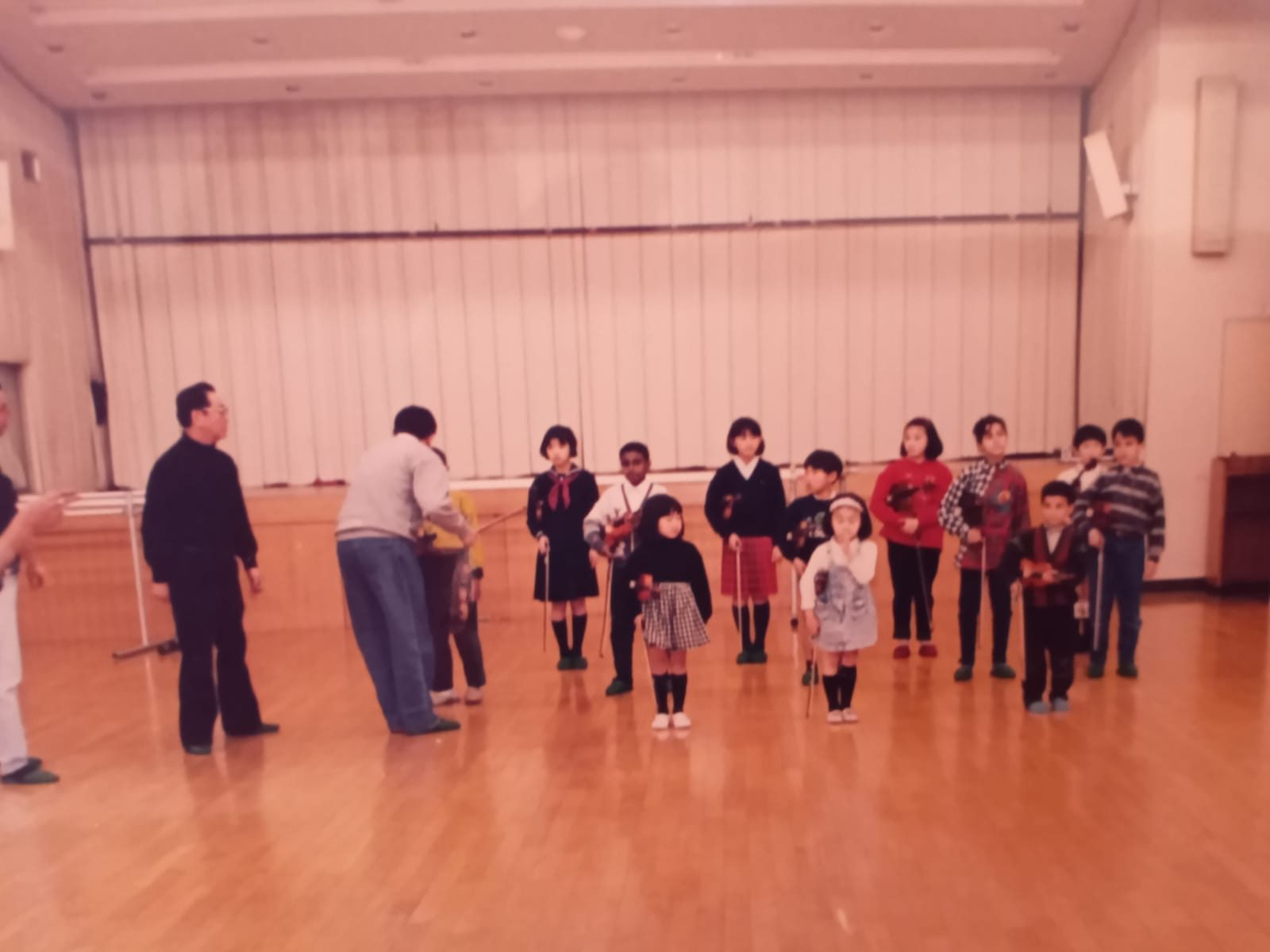
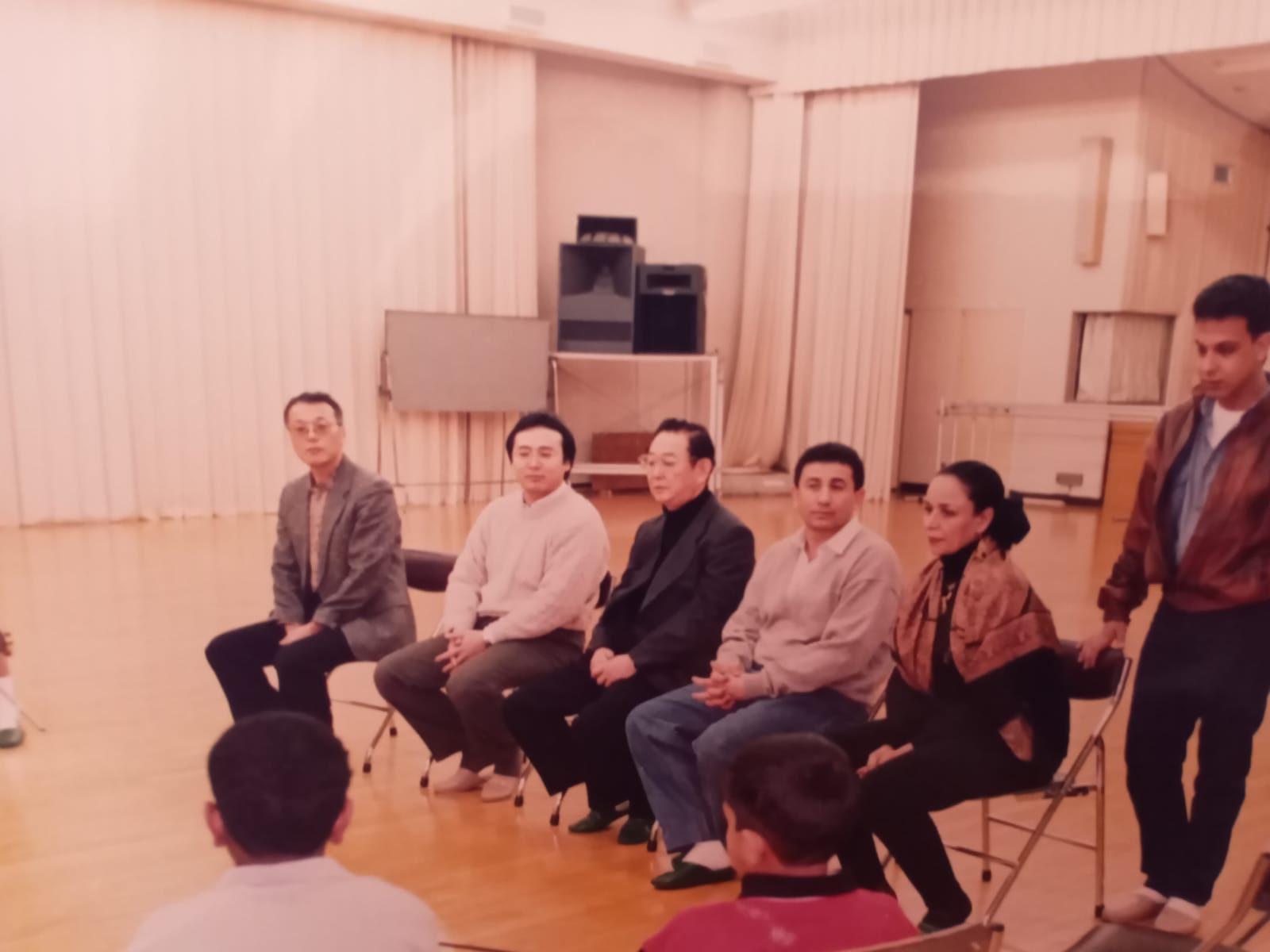
1994- Egyptian Suzuki students perform in Japan
Kobayashi returned to Egypt in June 1994 for a five-week follow-up. During this time, he invited Dr. Osman to Japan, where he received further training and attended the annual Suzuki concert. This trip was historically significant, as Dr. Osman had the opportunity to meet Dr. Shinichi Suzuki himself, who expressed great satisfaction that his method was being embraced at the Cairo Opera House and was benefiting young Egyptian musicians.
1997 – Dr. Mona Fekry: Founder of Egypt’s First Suzuki Piano Class
In 1997, Egyptian pianist Dr. Mona Fekry expanded the reach of the Suzuki Method by establishing Egypt’s first Suzuki Piano Class. Founder of the Cairo Suzuki Music Center and a member of the International Suzuki Association, Dr. Mona Fekry brought her deep classical training to the method. She studied at the Cairo Conservatory under Noémie Mélikian — a student of the legendary Alfred Cortot, founder of the École Normale de Musique in Paris — and under Egyptian pianist Marcelle Matta.atta.
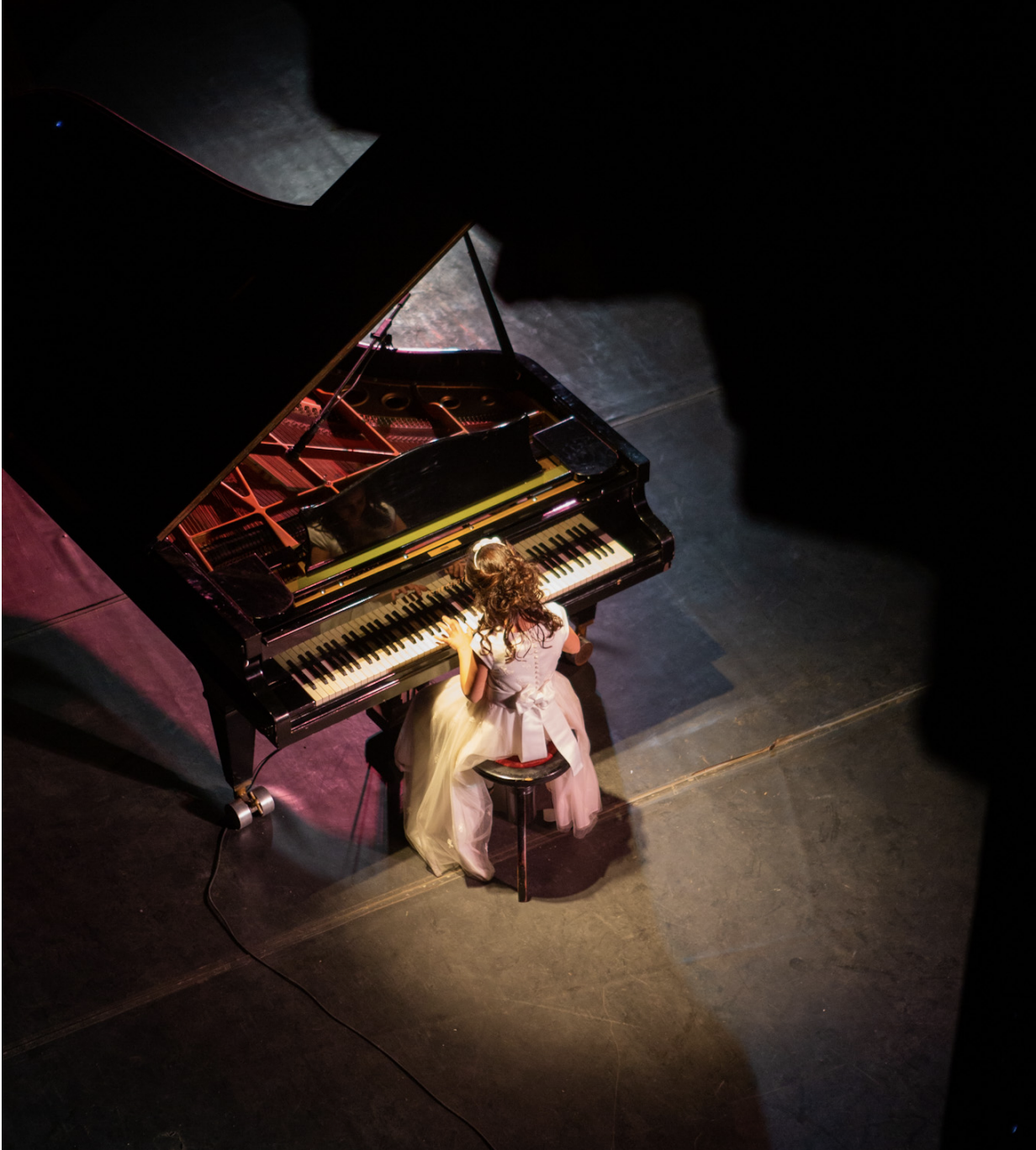
Her introduction to the Suzuki philosophy came through her own family. Her sons, Georges and Samuel Mohsen, had begun violin lessons with Dr. Osman at the Cairo Opera House. Seeing the method’s impact firsthand, she became a strong advocate for making it more widely accessible in Egypt.
Before becoming a full-time music educator, Dr. Mona Fekry had earned a degree in medicine and practiced for three years, but she ultimately left the medical field to dedicate herself fully to music and to the Suzuki approach. She has since specialized in teaching young piano students from the age of four, nurturing not just technical ability but also discipline, joy, and a lifelong love of music.
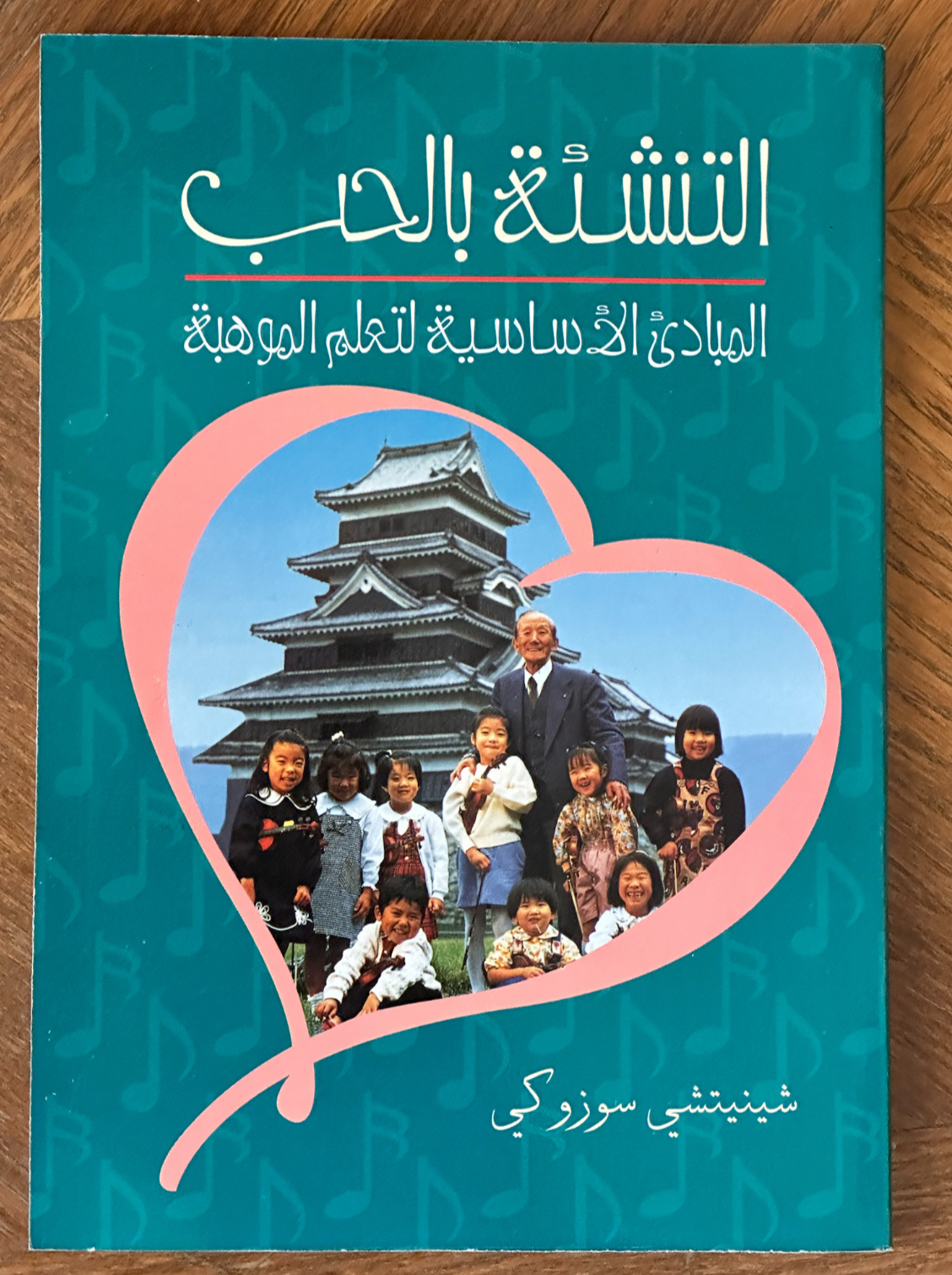
2001 – Arabic Translation of Nurtured by Love
The commitment of the family to the Suzuki Method extended beyond teaching. In 2001, Dr. Mona Fekry’s husband, Dr. Mohsen Edward, translated Dr. Shinichi Suzuki’s famous book Nurtured by Love into Arabic.
Both Dr. Mona and Dr. Mohsen have attended numerous international Suzuki conferences across Europe, and North America. These gatherings allowed them to deepen their knowledge, exchange teaching ideas with leading Suzuki educators, and strengthen Egypt’s connection to the worldwide Suzuki community.
This work not only expanded the network of Suzuki teachers in Egypt but also helped create a bridge between Egyptian music education and the global movement inspired by Dr. Suzuki’s vision.
2004 – Egypt’s Renewed International Presence
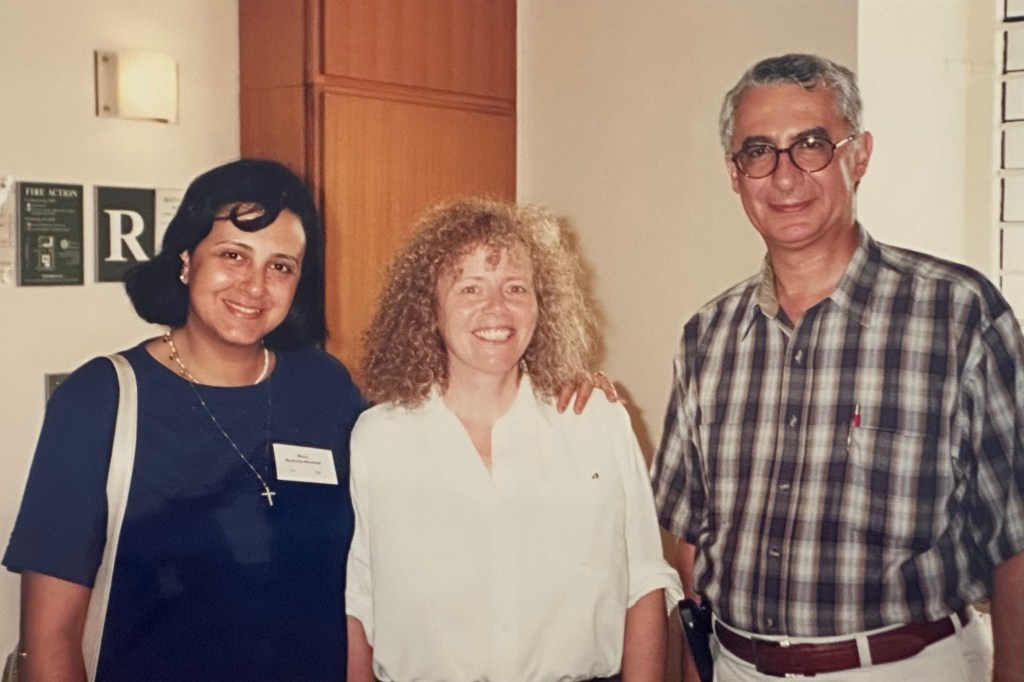
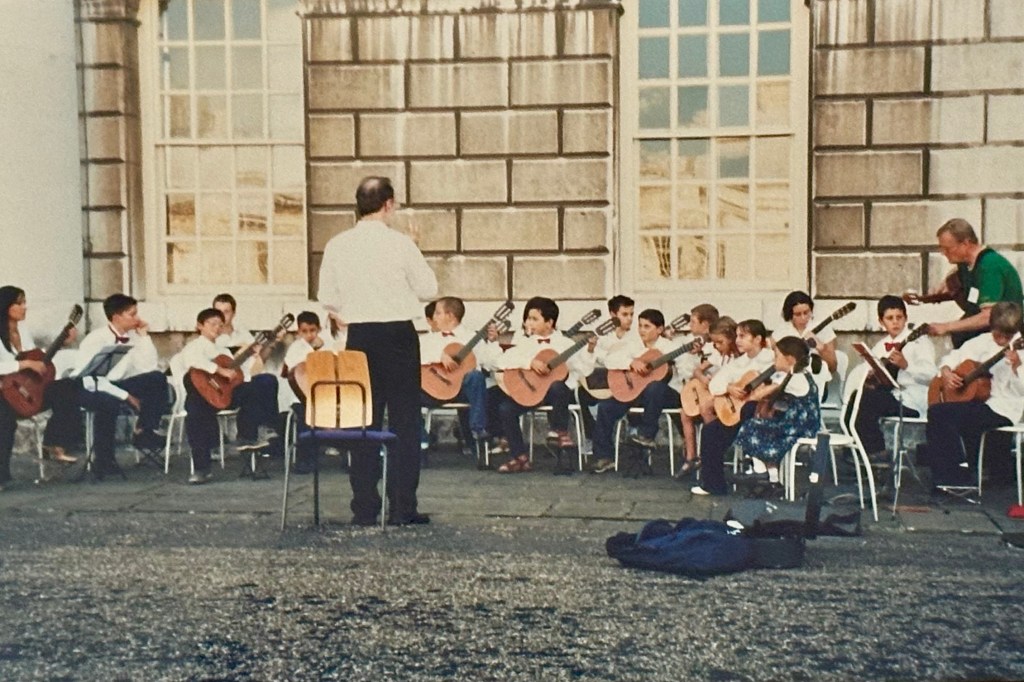
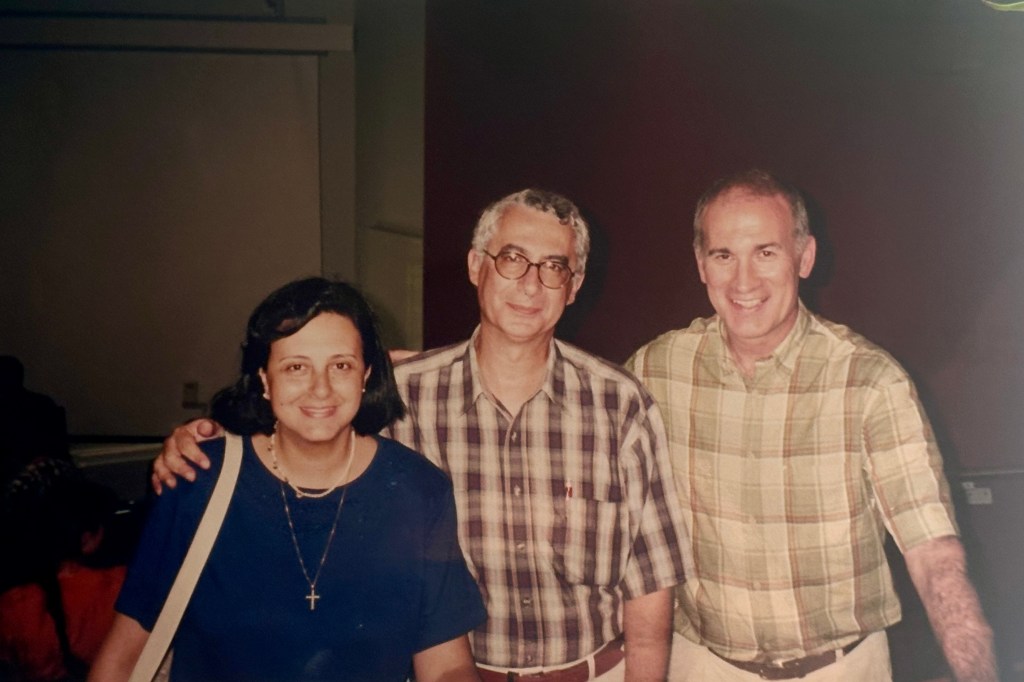
A decade after Egyptian students first performed in Japan under Dr. Osman El Mahdy, Egypt’s presence in the international Suzuki community was renewed in 2004 when Dr. Mona Fekry and Dr. Mohsen Edward attended the European Suzuki Convention — just three years after Dr. Mohsen’s Arabic translation of Nurtured by Love had been published. This time, they were joined by Georges and Samuel Mohsen, part of the first generation of Egyptian children to be raised within the Suzuki Method. As young violinists and future teachers, they took part in workshops and seminars, learning directly from leading European pedagogues.
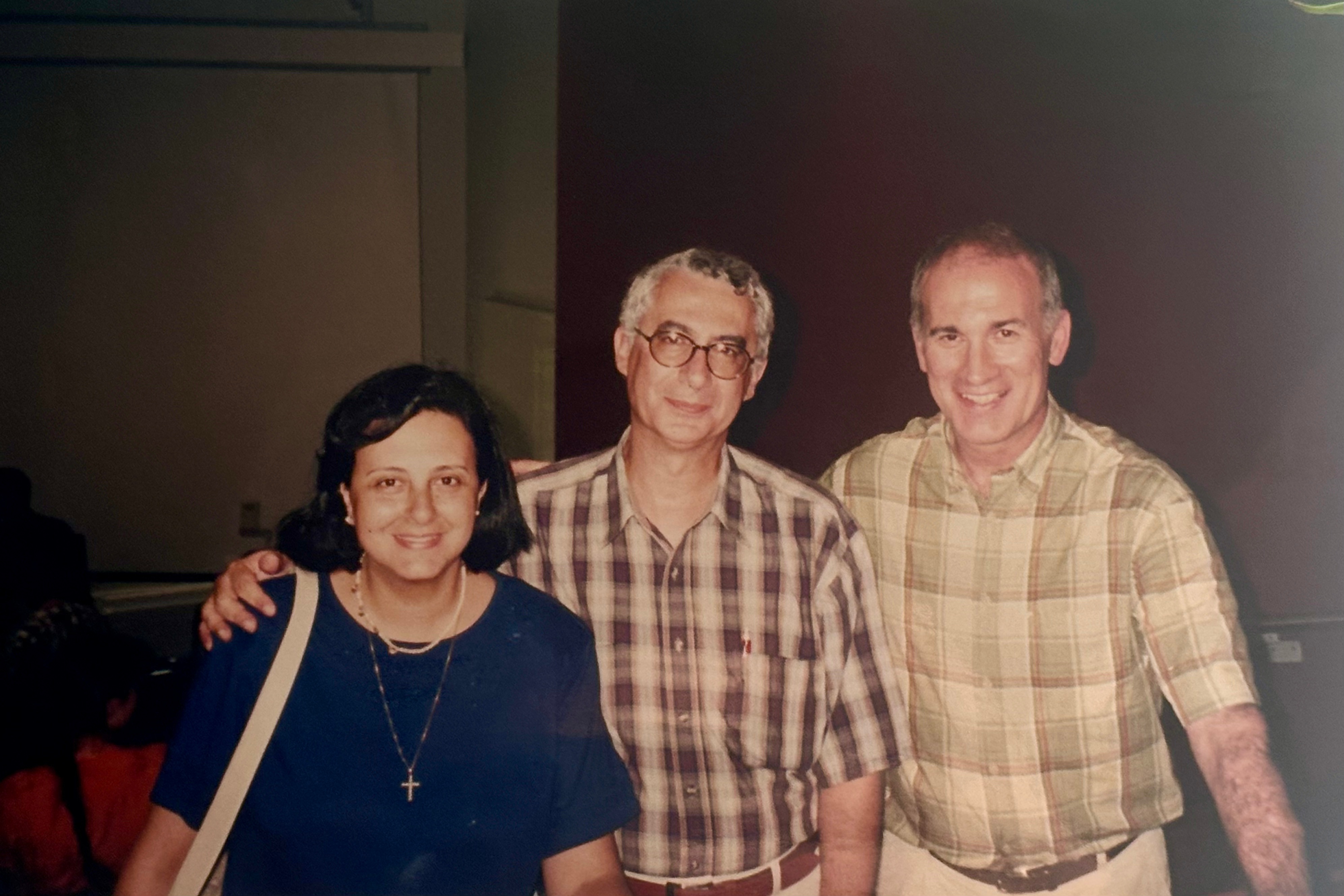
At the convention, Dr. Mona also shared her experience of introducing and nurturing the Suzuki Method in Egypt — reflecting on the challenges of building awareness, training teachers, and gaining acceptance in the country, while also highlighting the progress achieved and the community that had grown around the philosophy since Dr. Osman first launched the Suzuki violin class at the Cairo Opera House in 1993, and since she herself introduced Egypt’s first Suzuki piano class in 1997. For the Egyptians, the convention was more than an opportunity to absorb new perspectives: it was a platform to contribute their own journey — as teachers, parents, and first-generation Suzuki students — to a broader dialogue on accessibility, cultural adaptation, and sustaining enthusiasm for music education.
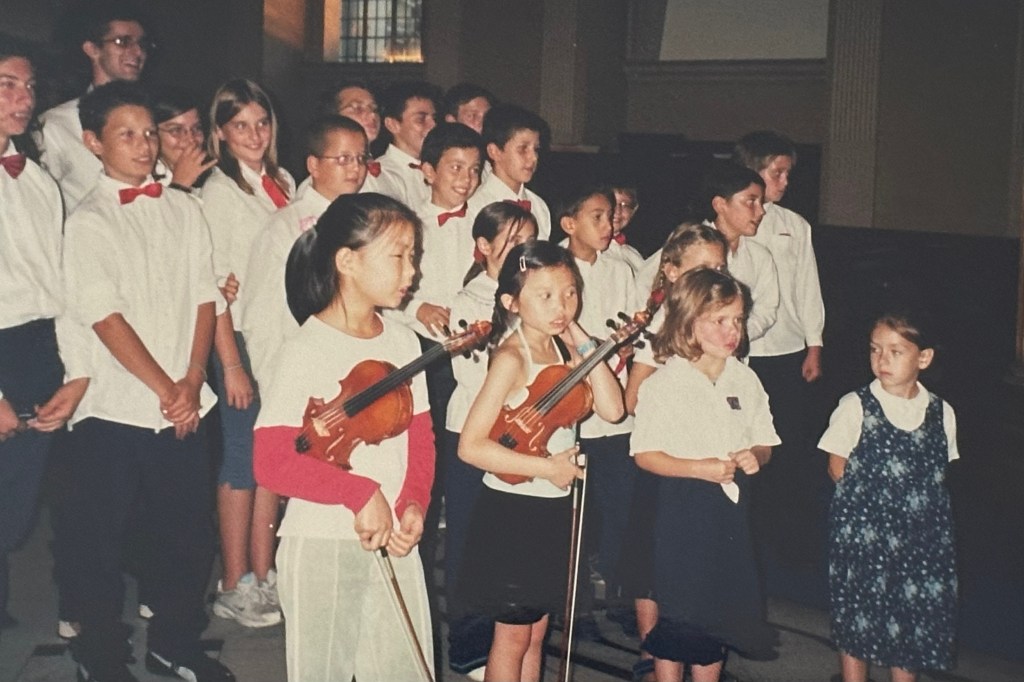


2007 – Suzuki Violin Beyond the Cairo Opera House
By 2007, a new chapter began. Georges and Samuel Mohsen, among the first Egyptian students to be trained through the Suzuki Method, established the first Suzuki Violin Class outside the Cairo Opera House. This was a pivotal development, as it brought Suzuki violin teaching into the wider community, making it accessible to students who were not part of the Opera House’s programs.


 Cairo Suzuki Music Center