Healthy foundation for beautiful tone production :
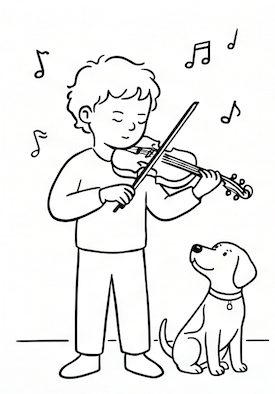
Position and posture form the foundation of violin playing. They are essential not only for producing a beautiful, resonant tone but also for developing a healthy and sustainable technique.
Whether you are a student, a parent supporting a young violinist, or an advanced player refining your skills, it is important to begin every practice session with a moment of awareness. Observe your entire body: how you stand, how you support the violin, how your left hand shapes the notes, how your bow hand rests on the stick, and how your arms, fingers, and body move together in harmony.
Beautiful violin playing should never feel forced. The search is always for a posture that is balanced, natural, and relaxed, allowing freedom of movement, ease of expression, and a singing, vibrant tone. By cultivating healthy habits from the very beginning, we give the violin the freedom to resonate fully and truly let it sing.
General Posture Checklist:
Is the violin comfortably supported between the shoulder and jaw, allowing the left hand to remain free from tension?
● Can the left hand slide smoothly up and down the fingerboard without gripping?
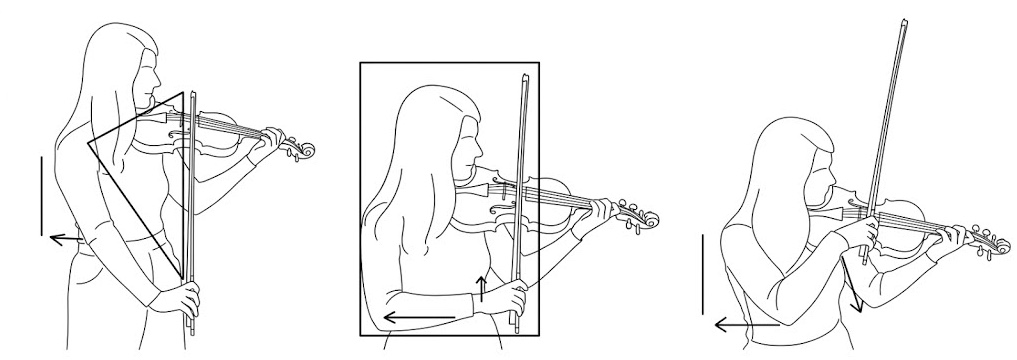
● Is the body aligned in a balanced manner, with the nose, sternum, elbow, knee, and foot approximately in line?
● Is the instrument positioned parallel to the floor?
● Does the left elbow hang naturally beneath the instrument, allowing the fingers to reach all strings with ease?
● Do the left arm and hand form a continuous and relaxed line from the elbow to the base of the fingers?
● Does the right arm open and close freely from the elbow, enabling a straight and natural bow stroke?
Left Hand Checklist
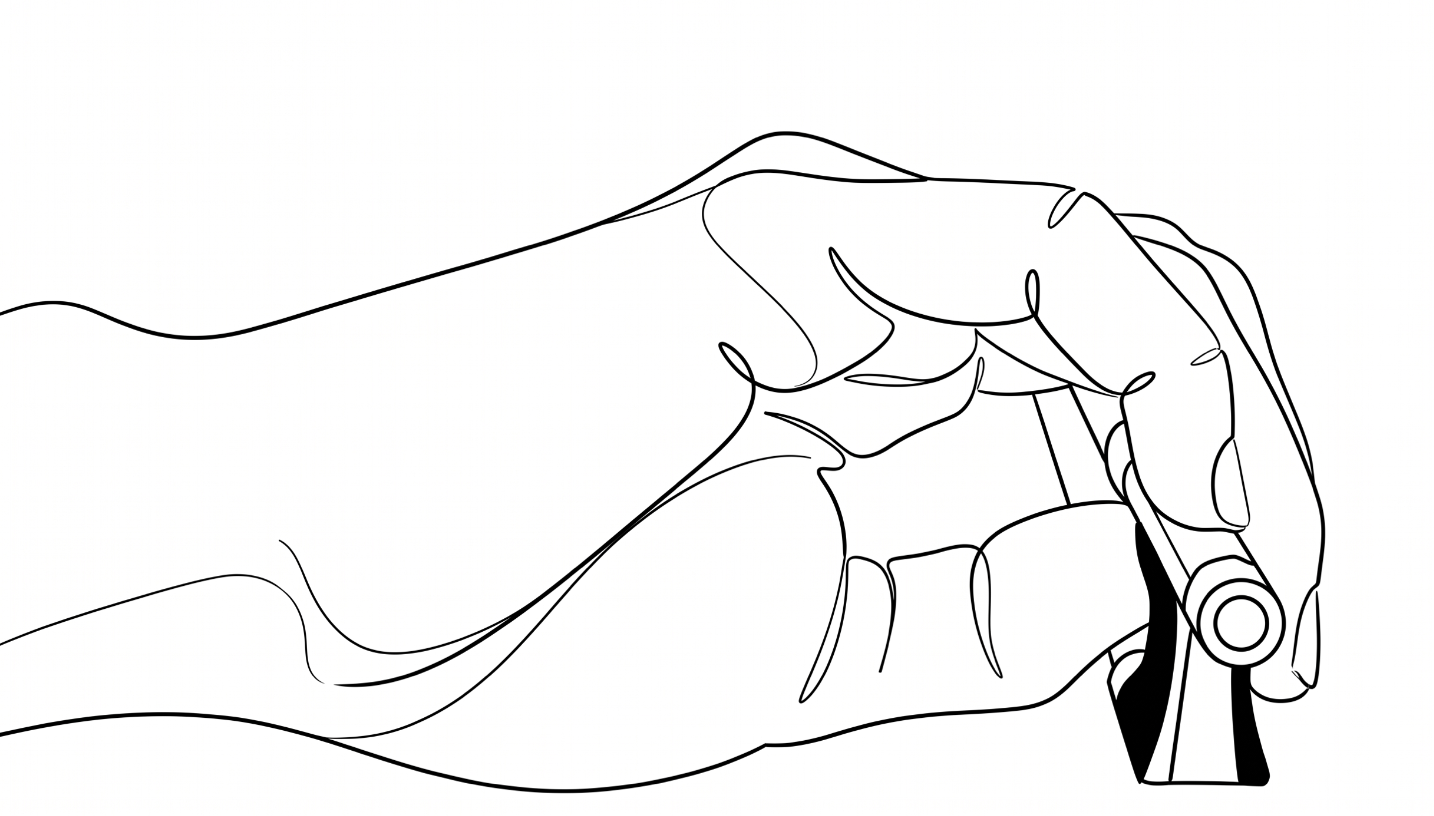
Are the fingers curved and springy, contacting the strings with their fingertips like small high arches?
● Does the hand remain framed over the fingerboard, with the fourth finger hovering naturally and ready to play?
● Is the thumb relaxed, light, and mobile, avoiding unnecessary pressure on the neck of the violin?
● Does the wrist maintain a comfortable, straight line with the forearm, avoiding collapse or excessive bending?
● Can the thumb move or gently tap while playing, indicating the absence of hidden tension?
Practice Tip: Try a shadow tap: lightly tap or wiggle the thumb against the neck while playing to release unnoticed tension and encourage greater freedom in the hand.
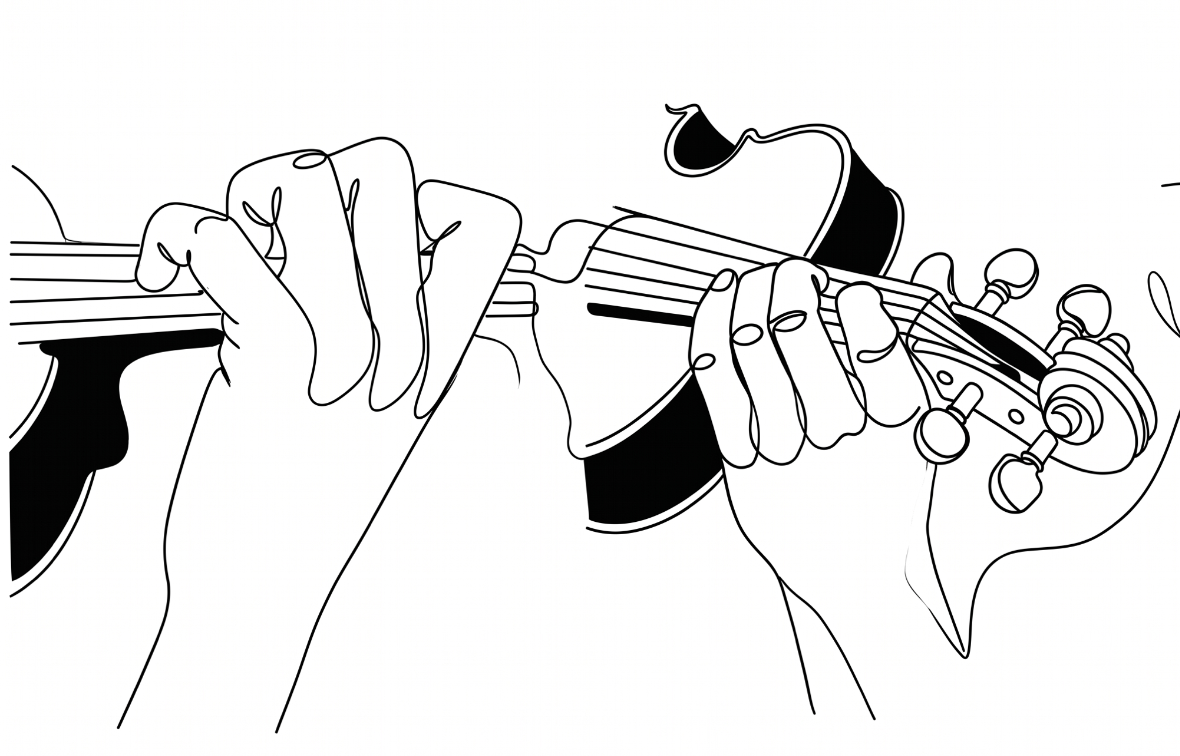
RIGHT: Proper violin / viola hand position from the hand side, showing back of the hand with fingers placed properly on the string.
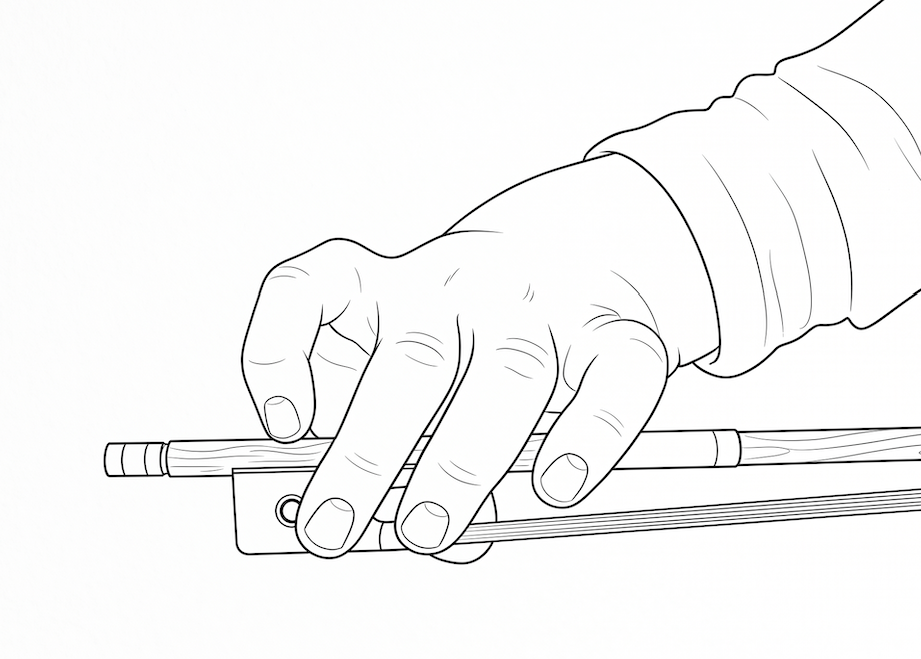
Bow Hand Checklist
Does the hand feel natural and relaxed, similar to its shape when hanging freely by your side?
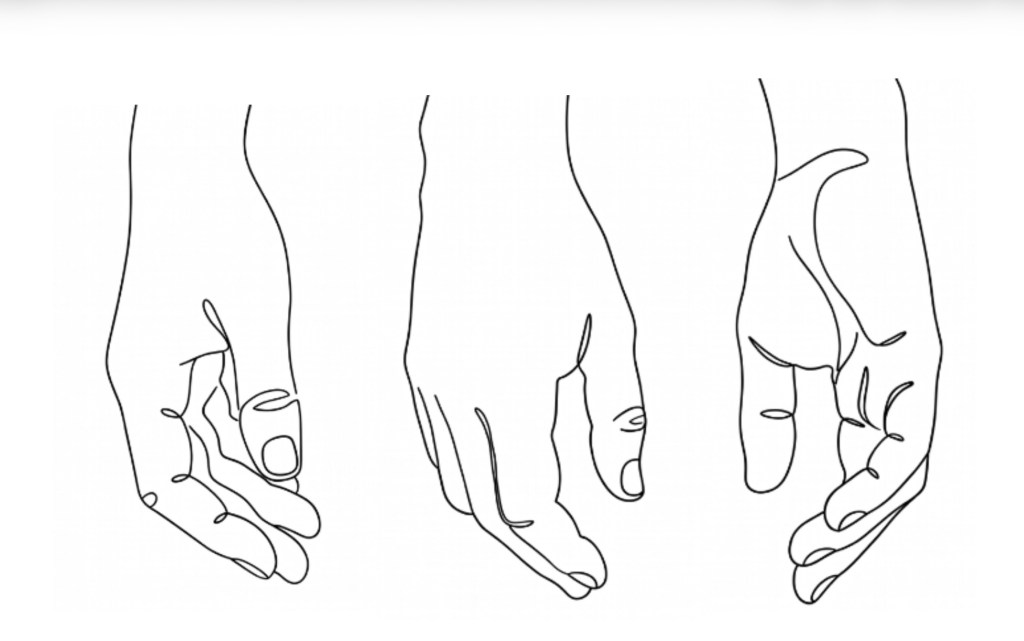
● Are all finger joints curved and supple, as if holding a delicate bubble?
● Do the fingers remain soft, flexible, and responsive rather than rigid?
● Is the thumb gently bent and resting inside the frog without becoming locked?
● Does the index finger rest on the stick with a gentle, supportive contact?
● Are the middle fingers comfortably touching the frog, helping to balance the bow?
● Is the little finger rounded, active, and never stiff or flattened?
● Does the bow travel parallel to the bridge, like a train moving steadily along its tracks?
● Is the bow placed in the ideal sounding point, approximately midway between the bridge and the fingerboard, to produce a clear and resonant tone?
Beautiful posture is not an end in itself. It is the means through which we gain freedom, prevent unnecessary tension, and develop a rich, expressive sound. A well-balanced posture allows both the player and the instrument to breathe, making music-making a joyful and natural experience.
About This Article
This article and the accompanying checklists are extracted from The Practice Journal, designed by Egyptian violinists and Suzuki Violin teachers Georges & Samuel Mohsen for their students. The journal was created to encourage young musicians to develop mindful practice habits, track their daily work, monitor their progress, and cultivate greater awareness of healthy and beautiful violin playing. By documenting their journey, students learn not only to practice more consistently but also to reflect on their growth and celebrate each step of their musical development.
About Cairo Suzuki Music Center
This article reflects the educational philosophy of the Cairo Suzuki Music Center (CSMC), founded in 1997 by Dr. Mona Fekry as Egypt’s first independent Suzuki music school outside the Cairo Opera House. Since the establishment of the violin program in 2007 by violinists and teachers Georges & Samuel Mohsen, the Center has continued to foster an approach to music education rooted in the principles of Dr. Shinichi Suzuki: encouragement, careful guidance, repetition, and the belief that every child can develop musical ability within a nurturing environment.
At CSMC, technical foundations such as posture, position, and tone production are never viewed as isolated exercises, but as essential tools that enable freedom of movement, healthy playing habits, artistic expression, and a lifelong love of music. Through thoughtful practice, supportive teaching, and a rich and varied repertoire, we strive to help each student grow not only as a musician, but also as a confident, disciplined, and imaginative individual.
For nearly three decades, the Cairo Suzuki Music Center has sought to create a welcoming community where children learn, collaborate, overcome challenges, and discover the joy of making music together, building friendships and musical memories that extend far beyond the classroom.


Leave a Reply